
The first book I read in 2024 was BBC News presenter Clive Myrie’s Everything is Everything. The last one I read in December 2024 was A Woman Like Me by Diane Abbott MP.
In some ways Clive Myrie and I are not so different. Reading his autobiography, despite our many differences, I discovered we have much in common.
He is the child of working class Jamaican parents from the Windrush generation who responded to the call to help rebuild Britain after World War II. I am a child of working class Scottish parents born during that war who worked hard all their lives to do their best for their five kids.
The brutal suppression of hundreds of children in the Soweto riots in 1976 was instrumental in raising our political consciousness of the injustice of the apartheid regime in South Africa. Reggae music in the 1970s helped shape that consciousness and for both of us Bob Marley was an important influence.
The rise of the National Front in the late 1970s and early 1980s was something that worried us both, although he was more personally affected by it . When I marched these brutal racists in London in the eighties I was shocked and frightened by their visceral hatred of black people.
Clive and I both went to Sussex University on leaving school, although he had a more successful outcome than me. Unlike Clive who thrived at university, my time at Sussex was brief and I returned home before the end of my first year. I didn’t have the confidence or desire at that time to get the most out of university and I missed home.
The final sentence in Myrie’s autobiography reads like a call to action in these troubled times and one I endorse wholeheartedly.
If I have learned anything, it is that we all have the capacity for compassion and empathy, but it takes courage, wisdom and humility to mine the goodness in us all.
Like Myrie, Diane Abbot is the daughter of working class parents who left Jamaica to build a life in Britain in the early 1950s.
A target of online abuse for many years, she illustrates in her book how racism has always been a part of her professional life, including throughout her career in the Labour Party.
She describes the list of leaders of the Labour party that have failed to support her and I was glad to see so many of them and their apparatchiks called out for their shameful misogynist and racist behaviour.
Abbott was a smart working-class black girl whose teachers didn’t think would get into Cambridge but she proved them wrong. She also faced many rejections before being elected as Britain’s first black female MP.
She has fought relentlessly throughout her career against white and often privileged men in defence of her left-wing views. While I have disagreed with her on some issues, who could deny that she is a woman of principle?
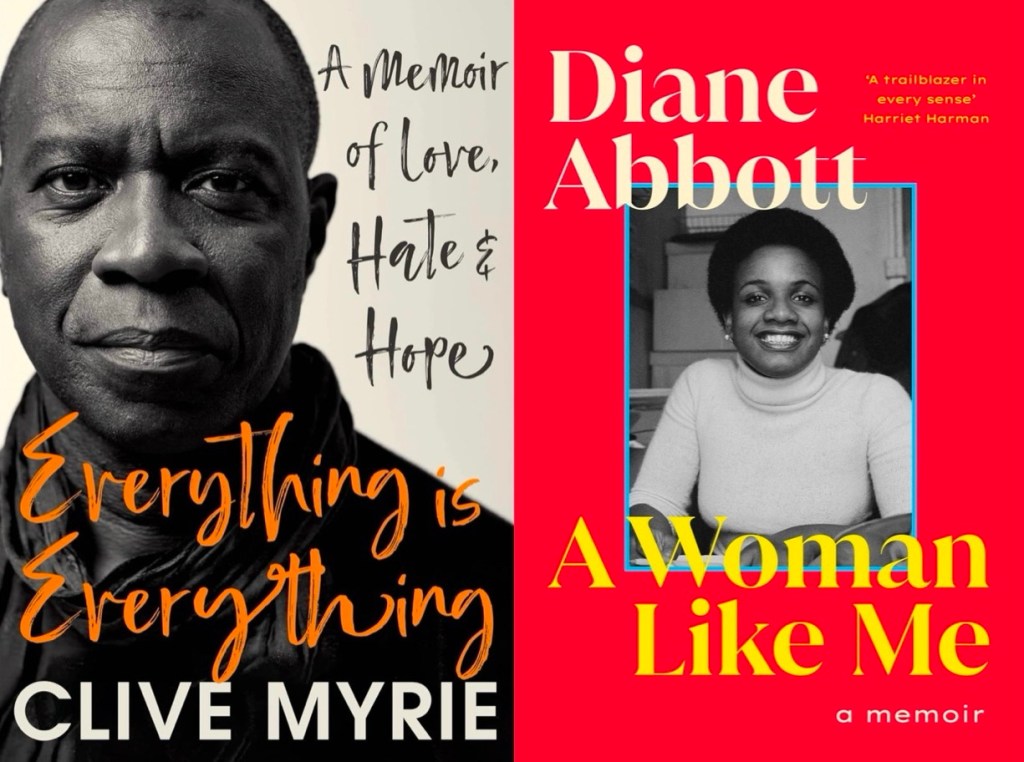
I highly recommend both books. They took me back to different points in recent history and were written with an honesty that allowed the reader to learn so much about these talented public figures.
 Jackie Galbraith
Leave a comment