
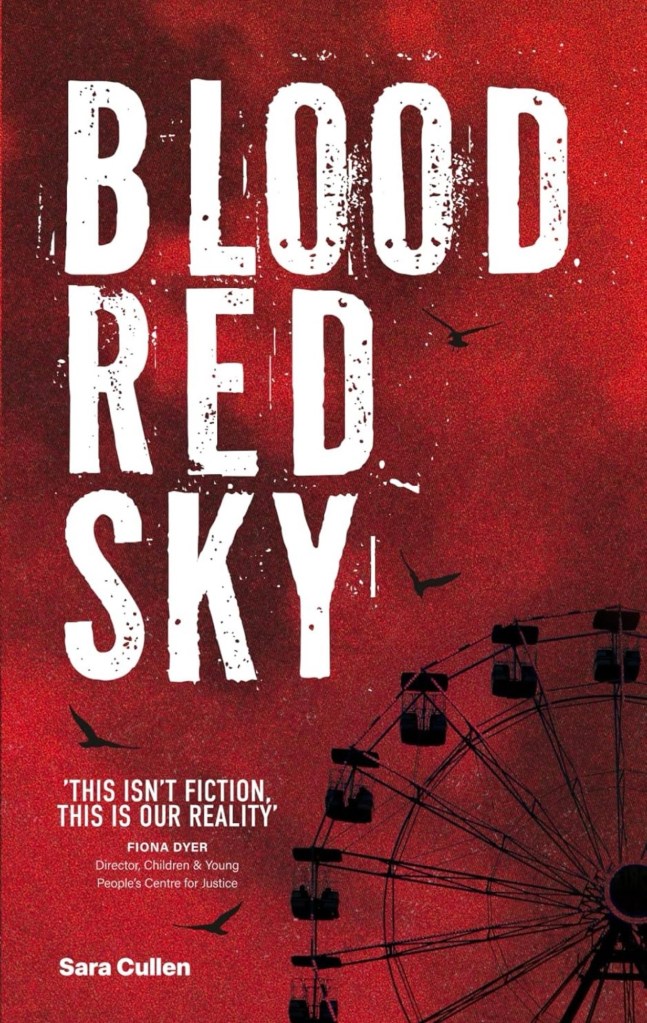
Blood Red Sky is primarily about 16-year-old Aaron Smith, his role in a fire that causes major damage to his school and the consequences that follow. Because his parents won’t allow him to be bailed in their home, and he is technically regarded as an adult by the legal system, Aaron is detained in a Young Offenders Institution while he awaits trial scheduled for five months later. The book paints a very sobering picture of life inside a prison, particularly for teenagers and those on remand.
What I liked most about the book was the development of Aaron’s character and his two siblings, 14-year-old brother Dylan and wee sister Chloe. It gave a voice to these young teenagers who were trying to get on with day-to-day life, while their parents tried to keep them fed through demoralising trips to the food bank. The problems arising from intergenerational poverty and childhood trauma were illustrated through the children’s father’s involvement with crime, as well as his brother and father before him.
Blood Red Sky is categorised by booksellers as fiction for young adults but I believe its reach should be much wider. Storytelling, whether fictional or based on lived experience, is a powerful way to raise awareness, develop empathy and accelerate action. Blood Red Sky helped me understand better the pressures young people face in handling difficult and alien situations, especially in being heard. Aaron not being listened to was a theme throughout the book.
The book also highlighted how the systems that are there to support young people at the worst moments in their lives often exist in isolation and end up making things worse. While more and more parts of the public sector aspire to be trauma-informed and to deliver on The Promise to care experienced young people, there remains a desperate need to join up and do more.
Fiona Dyer is the director of the Children and Young People’s Centre for Justice based at the University of Strathclyde. CYCJ exists to ensure that Scotland’s approach to children and young people in conflict with the law contributes to better outcomes. In her Afterword in the book she reminds us that:
“We live in a society where many children and young people who end up in conflict with the law do so not because they are inherently bad or dangerous, but because they have been shaped by circumstances far beyond their control. Trauma, neglect, abandonment, coercion and adversity are often part of their daily lives. Many have experienced things no child should have to go through: the imprisonment of a parent, living in unsafe or violent homes, growing up in poverty, going through the care system and suffering the deep and lasting effects of bereavement. And still, we expect them to survive, to cope, to behave ‘appropriately’.”
There is some very good work going on across Scotland to lead to better outcomes for young people in conflict with the law. For example, West Lothian College has a dedicated team who work with statutory and third sector partners to provide personalised pathways to teenagers in or around the criminal justice system. I met numerous young people like Aaron while I worked at the college and saw how life-changing this values-driven, joined-up approach was.
Blood Red Sky is an excellent book that takes us into the minds of the teenagers caught up in the criminal justice system. This is especially valuable for those with no first-hand personal or family experience of a young person in conflict with the law. Empathy is built on understanding and I have no doubt that this book would help readers get a sense of what Fiona Dyer describes.
 Jackie Galbraith
Leave a comment